
[ AVAILABLE ONCE ENROLLED ]Meet your workshop hosts!
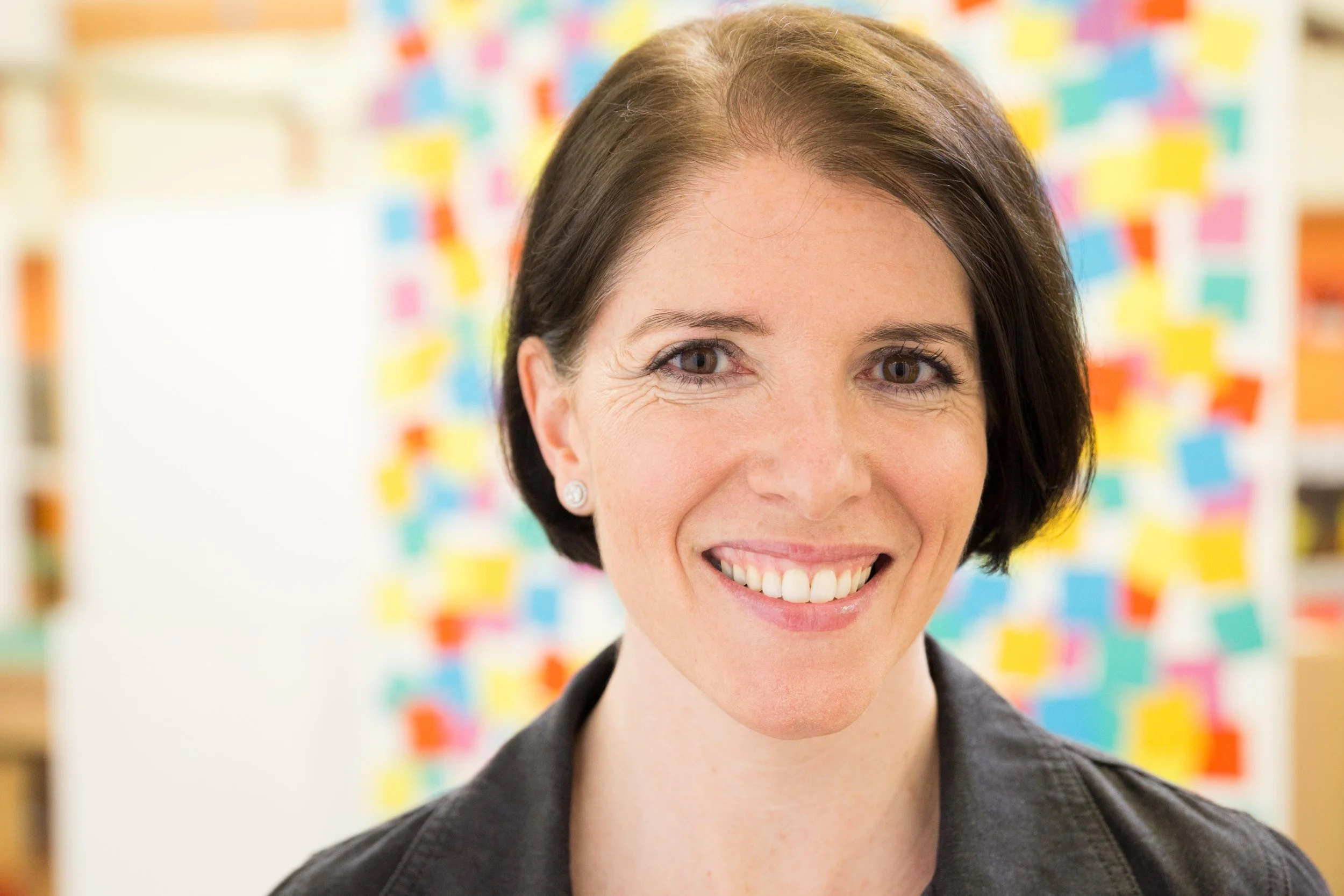
Nadia is passionate about developing a more equitable, creative, strategic, collaborative, and impactful social sector. She is a Senior Designer with the Stanford d.school, and she co-founded the d.school's Designing for Social Systems Program. She spend her time helping organizations better scope the challenges they want to address, engage end-users, increase intra-organizational creativity, and incorporate radical collaboration.
Nadia also co-Founded and Directed Stanford University’s Effective Philanthropy Learning Initiative (EPLI), which aims to help high net worth individuals increase their philanthropic impact. Prior to launching EPLI, Nadia was an inaugural fellow with the d.school, and the Walter and Esther Hewlett Design Fellow with Stanford PACS where she focused on the intersection of philanthropy and design. Over the past two decades she has launched several organizations and initiatives including the Initiative for Policy Dialogue with Nobel Laureate Joseph Stiglitz at Columbia University; the Women Leaders Intercultural Program with Ireland’s former President Mary Robinson; Global Policy Innovations Program at the Carnegie Council on Ethics and International Affairs; and the Building Bridges Program at the Doris Duke Charitable Foundation.
Nadia received her BA in economics and international relations from Stanford University and her MA in international affairs from Columbia University’s School of International and Public Affairs. She is a board member of KQED.
NADIA ROUMANI (Co-lead)

Through workshops and classes, and in his current role as Director of the Designing for Social Systems program, Thomas’s passion is helping people understand the practice of human-centered design - and their ability as designers - to innovate how they learn, think and problem solve.
Working with both students and professionals, Thomas has designed and lead immersive hands-on experiences including the Design Thinking Bootcamp Executive workshop and various iterations of our fundamentals course, Design Thinking Studio. From these programs, he’s developed methodologies and created resources free to the public such as the Bootcamp Bootleg and the Design Project Guide. As Director of Designing for Social Systems, he teaches professionals how to apply design thinking to complex social challenges, and facilitates workshops for social impact leaders to develop a more human and strategic practice.
Beyond design, Thomas embraces his other roles as an artist, engineer and rambunctious father to two daughters.
THOMAS BOTH (Co-lead)

JILLIAN GILBURNE (Workshop Coordinator)
Jillian Gilburne is a design researcher and strategist passionate about using human-centered design to improve social systems and public services. Over the past four years, she has been part of the inaugural cohort of the U.S. Digital Corps, working with the Office of Refugee Resettlement’s Unaccompanied Children’s Bureau to modernize tools and processes that support child safety and care across a nationwide shelter network.
Previously, Jillian has worked with the Veterans Administration, Evanston City Hall, and the Scottish Parliament, helping teams translate research into actionable insights and service improvements. Her work is grounded in collaboration, systems thinking, and a belief that good design can help institutions better serve people with dignity and care.
Course FAQ
-
Practitioners and leaders in the social sector (i.e. nonprofit organizations, government agencies, or foundations), or mission-driven companies, seeking to learn how to advance their work using human centered design, systems, strategy and equity practices. Also a good fit for practitioners looking to integrate these methods into their organization’s overall culture and practices.
Participants will benefit from having some previous exposure to human-centered design. We will not extensively teach some of the basic techniques of HCD like ethnographic interviewing, synthesizing findings, ideating, and low-resolution prototyping & testing. However, we will do the work that sets you up for more success when you use those tools. We aim to help you build a strong foundation that will amplify the fundamental HCD processes.
We recommend you have some previous experience: at least a 1-day introductory course, and/or some real-world HCD experience. We will be offering a self-guided Introduction to Human Centered Design online course that participants can take at no additional cost.
-
Here are some lovely testimonials we received about the workshop:
"I'm so glad I spent five weeks in Integrative Design to strategize and plan specific action items toward my goal of making greater social impact in early childhood education. For anyone looking for clarity with how to put their design into practice for social impact, I highly recommend this course! Nadia Roumani and Thomas Both are inspiring educators that made a large cohort of social entrepreneurs and designers from all over the world feel seen and heard. The cohort itself put me in touch with some amazing folks that I would have never met otherwise!"
— Sonia Tiwari, Children’s Media Researcher, Everyone.AI"I had the pleasure of participating in this program, which focuses on the intersection of integrative design and social impact and seamlessly blended practices across Strategy, Equity, Systematic Thinking, and HCD. My favorite part about this was how it struck the perfect balance between being informative and maintaining the openness and flexibility of a true design process. It was a great experience; I learned a lot, got inspired plenty, and I am already putting much of it into practice. So, it truly lives up to the name."
— Saja Othman, Creative Director, The Valve Studio"This set of resources and the way you've interwoven the 4 methodologies is right in line with resources that my organization is in need of. It feels like y'all created a cheat code for our organization to be able to do the work we need to do without having to design all the tools and process integration ourselves."
— Erin Bray, Design & Improvement Facilitator, MCREN -
Yes! They can register up until April 13, 2026.
-
It’s ideal to join from your computer and not a phone or tablet, so you can see and read the details we show on screen.
-
Complete the pre-work that you will receive after you register for the program. You will be asked to identify a project or program to which you want to apply the workshop's content.
Before we begin, bring something to write with and paper/notebook. Print out the worksheets we will provide. (If you forget them you can still work on paper using the frameworks we will display.)
-
During the first four primary sessions (Tuesdays) your video will not be visible to others and your audio will be muted. We’re sure you’d look great! That said, you can relax (even in the comfort of your pajamas) and focus 100% of your attention on the activities. There will not be any breakout rooms.
During the Studio Hours (Thursdays) and the final Tuesday, we invite you to be video-on so we can be in conversation.
-
Yes, as long as you are registered, the recording will be shared with you. You'll also get full access to all of the workshop resources and will still be eligible to receive a statement of participation.